Russian Tourist’s Video at Wagah Border Sparks Debate on India’s Civic Sense
Russian Tourist’s Video at Wagah Border Sparks Debate on India’s Civic Sense
Civic sense has always been a widely debated topic in India. From overcrowded trains and chaotic traffic to everyday littering on roads, discussions about responsible behavior in public spaces continue to resurface. Recently, this conversation gained fresh attention after a viral video of a man littering at the Wagah-Attari Border was recorded by a Russian tourist. The clip spread rapidly across social media, sparking outrage and embarrassment among viewers.
The Incident That Sparked the Debate
In the video, a Russian woman tourist is seen recording the patriotic parade experience at the Wagah-Attari Border. Sitting nearby was an elderly man eating an ice cream cone. Instead of disposing of the wrapper in a dustbin, he casually threw it under another seat. The tourist, visibly disturbed, shook her head in disbelief as the camera captured the moment.
The video quickly attracted attention online, with many viewers condemning the act. Several pointed out that such behavior damages India’s global image, especially when witnessed by foreign visitors.
Netizens React Strongly
As the video circulated, thousands of comments highlighted concerns over declining civic responsibility. Many argued that while campaigns and awareness drives exist, individual behavior has not kept pace. Others noted that littering is not restricted to any age group or background, as even educated and affluent people are often seen ignoring basic cleanliness rules.
Why Civic Sense Matters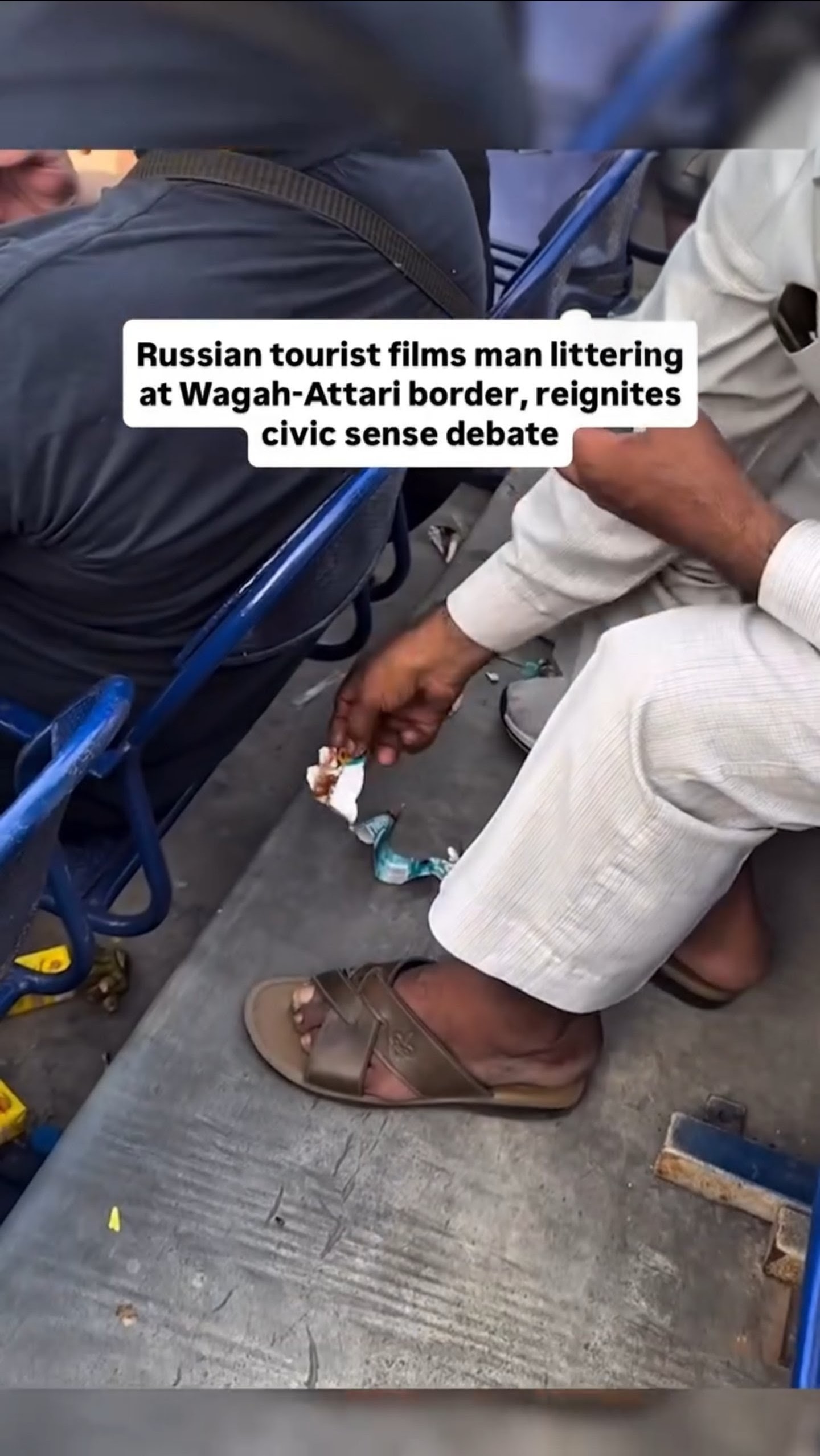
Cleanliness and civic responsibility extend beyond appearances. They directly affect public health, safety, and the overall quality of life. Nations admired globally for their cleanliness, such as Japan and Singapore, owe much of their reputation to widespread civic awareness and personal responsibility.
In India, initiatives like Swachh Bharat Abhiyan have raised awareness, but the success of such programs depends largely on individual action. When tourists observe careless behavior at important sites, it not only affects tourism but also the cultural reputation of the country.
A Global Image Problem
India attracts millions of tourists each year, and sites like the Wagah Border hold deep symbolic value. They are more than just destinations; they are reflections of national pride. An act as small as discarding trash irresponsibly can overshadow the grandeur of national events and leave a lasting negative impression on international visitors.
Moving Forward – What Needs to Change?
- Stricter Enforcement: More dustbins should be placed in public areas, and penalties imposed on those who litter.
- Awareness Campaigns: Schools, colleges, and communities must integrate civic lessons into everyday practice.
- Social Responsibility: Public figures and influencers can help encourage better habits by setting examples.
- Tourist Hotspots as Models: Prominent sites like the Wagah Border should enforce stricter cleanliness measures to set standards for others.
Conclusion
The viral video of a Russian tourist capturing a man littering at the Wagah-Attari Border is more than just an isolated incident. It reflects the urgent need for stronger civic sense in India. True patriotism lies not only in celebrating national pride but also in maintaining clean and welcoming public spaces.
If India aims to enhance its global image, every citizen must play a role by taking small but meaningful steps—such as using dustbins and respecting shared spaces.
What do you think? Should stricter laws be the solution, or does the change need to begin with individuals? Share your views and join the conversation.